
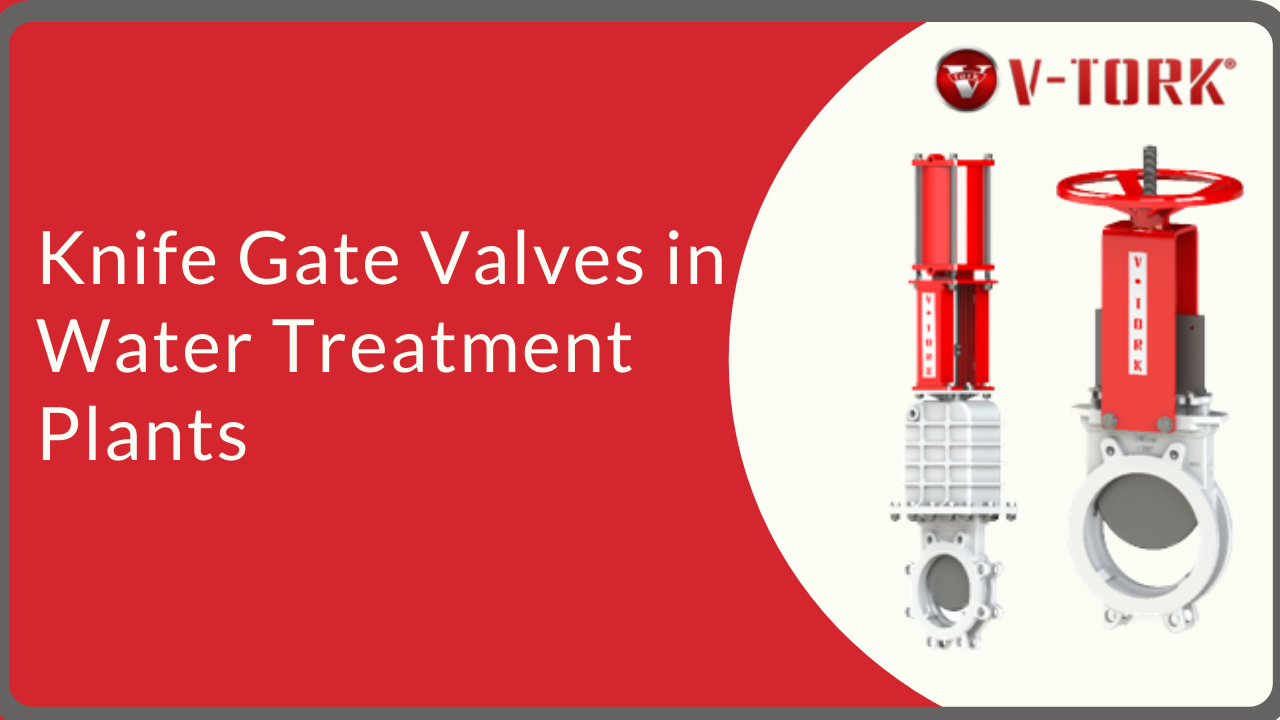
How Knife Gate Valves are used in Water treatment plants?
Knife gate valves are designed to work in some of the extreme conditions. Since it has a blade that is sharpened enough to cut through heavy liquids, they are especially useful in waste water treatment where corrosion is an important issue. For example, unidirectional knife gate valves or bidirectional knife gate valves can be used in sewage treatment plants and wherever the transport of waste water, sludges and chemical or biological media need to be controlled.
Basically, water treatment plants are of two main types: drinking water treatment plants and wastewater treatment plants. A typicalwater treatment valves has four main objectives:
pre-filtration, filtration, pre-treatment, chemical treatment, and disinfection. Even though the treatment is necessary in order to improve the quality of drinking water, the process creates its own operational problems.
Knife gate valves are deployed inside the master pump section at the plant by metal seating hence they are ideal for the conditions prevailing in a pump station. Knife gate valve manufacturers, usually made the valves with stainless-steel material for superior corrosion resistance.. These heavy-duty water treatment valves operating in the pump station, allow the flow to be diverted between the two large portions located in the pump station. The valve body deflects the internal pressure enabling the cast stainless steel not to bend or twist under extreme conditions. The stainless-steel valve manufactured under precision provides excellent fitting capability.
All the check valves including the pumps should be fitted with a shutoff valve to allow the isolation of the system and maintenance of the lift section equipment. In a wastewater treatment plant wastewater air valves installed are isolated by gate valves. The shutoff valves for wastewater service usually comes in different forms or varieties; however, they all must be fabricated to avert clogging and damage from the flow of heavy fluids.
For tedious working conditions, a knife gate valve is commonly used. These knife gate valves are usually made up of Cast iron or stainless steel depending upon the operational conditions subjected to PH of the media. Since knife gate valves can cut through the sediment, they are commonly used for isolated suction of wastewater pumps because here the flow control is not necessary. Poor quality gate valves strictly should not be used for flow control or throttling control because the vibrations produced while the gate is open partially can damage the valve.
For transporting the contaminants removed from the waste water in the different clarification processes these valves can be used without any hindrance or faulty functioning. The Knife gate valves i.e., the water treatment valves control all media safely and reliably, whether in the transportation of the sludge from sewage to the digestion tanks or in the removal of sludge and gas of the digester from the digestion tanks.
Why Us?
We V-Tork Controls being one of the leading knife gate valve suppliers in India have been maintaining our standards in such a way that we have set high demands among the customer base on all products we manufacture. Right in a technical operation point of view we make sure that the customer specification requirements are crystal clear.
This particular work ethics is of greater importance for us because valves are one of the vital parts in any industrial machinery functioning hence our valves are planned, designed and produced to meet those set standards of the industry. Our valves always meet the highest standards that are cost effective. We have a support team of experts who are fast and steps up to the mark on the requirement that are always on the rise.
FAQ’s
Where are knife gate valves installed in water treatment plants?
Knife gate valves can be installed at different points in water and wastewater treatment systems where reliable isolation of wastewater, sludge, slurry or other media is required. Typical applications include pump stations, sludge-handling systems, pipelines and equipment isolation points. Their suitability depends on the characteristics of the media and the operating conditions of the plant.
Why are knife gate valves suitable for sludge handling in wastewater treatment?
Knife gate valves are suitable for sludge-handling applications because their knife-edged gate can pass through media containing solids and sludge. This makes them useful where conventional valve designs may experience difficulties with solids accumulating around the seating area. The valve should nevertheless be selected according to sludge concentration, pressure, temperature and other process conditions.
Can knife gate valves be used for sewage and wastewater applications?
Yes. Knife gate valves can be used in sewage and wastewater systems for applications involving wastewater, sludge and other media containing suspended solids. V-TORK describes their use in sewage treatment plants, wastewater pump systems and sludge transportation applications.
What materials are commonly used for knife gate valves in water treatment applications?
The appropriate valve material depends on the wastewater composition, solids content, corrosion conditions, pressure and temperature. V-TORK CONTROLS knife gate valve range includes materials such as cast iron, WCB, stainless steel and other material options, allowing the valve construction to be matched to the application.
Why is corrosion resistance important when selecting valves for water treatment plants?
Water and wastewater treatment processes can expose valves to corrosive media, chemicals and contaminated fluids. Selecting suitable body, gate, seat and trim materials can help the valve withstand the service environment and maintain reliable operation. Stainless-steel construction or suitable corrosion-resistant materials may be considered where the process conditions require them.
Can knife gate valves be used to isolate wastewater pumps and equipment?
Yes. Knife gate valves can be used as isolation valves around wastewater pumps and related equipment when the process requires the equipment to be separated from the pipeline for maintenance or servicing. The valve should be selected based on the required isolation function, media characteristics, pressure, temperature and solids concentration.