
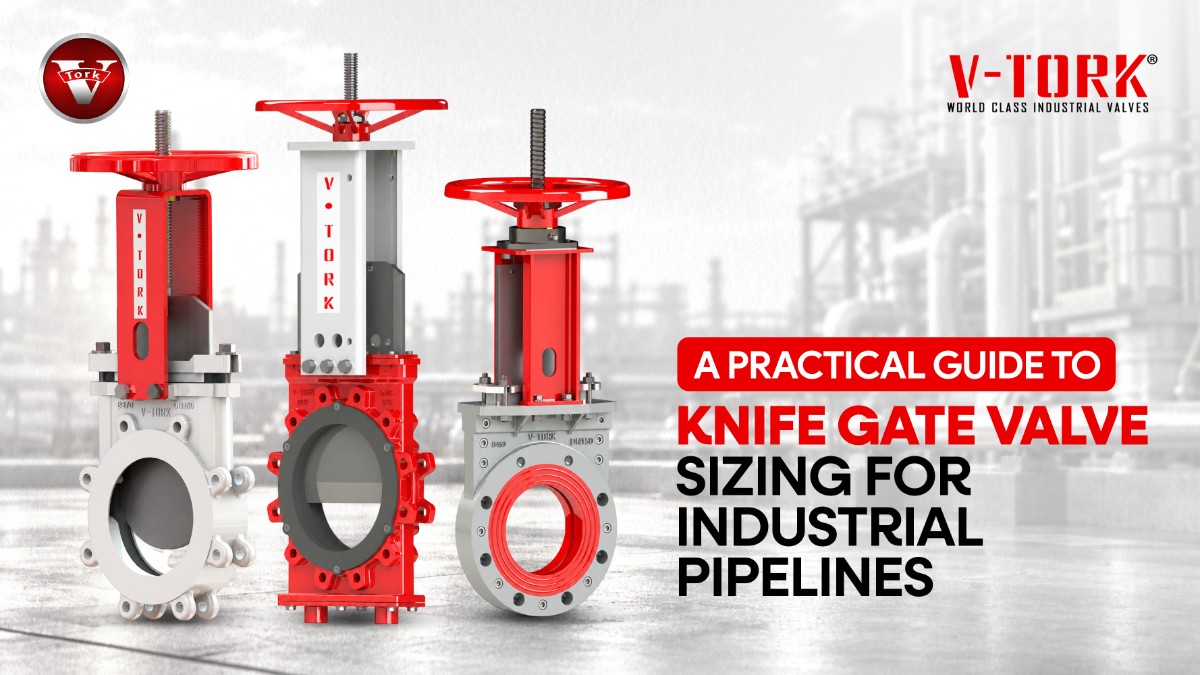
A Practical Guide to Knife Gate Valve Sizing for Industrial Pipelines
Ask most procurement teams how they size a knife gate valve, and the answer comes down to one thing, match it to the pipe diameter. It’s not wrong, exactly, it’s just incomplete. And that gap is usually where the trouble starts, months after the valve is already in the line.
We’ve sized knife gate valves for pipelines across mining, power, paper, cement, water treatment plants, and chemical sectors long enough to know that pipe diameter is where sizing starts, not where it ends. Here’s what the rest of that conversation should cover.
Pipe Diameter Alone Doesn’t Decide the Right Size
Matching a valve to the nominal bore of the pipeline is the obvious first step, and it’s rarely wrong on its own. What it misses is flow velocity. A valve sized purely to the pipe can still create a bottleneck or, in the opposite direction, leave so much extra clearance that solids in a slurry line settle instead of moving through cleanly. For industrial pipelines carrying anything with suspended solids, the actual flow rate and velocity through the valve matter as much as the bore itself. Sizing on diameter alone treats the valve as a passive fitting instead of a component that actively shapes how the line performs.
Understanding Knife Gate Valve Dimensions and Standards
Face-to-face length, gate thickness, body depth these aren’t numbers a manufacturer picks randomly. They follow standards like MSS SP-81, AWWA and depending on the application, valves are typically built starting from size 2 inches. These dimensions decide how the valve actually fits into the pipeline. Get the face-to-face length wrong, and your spool piece doesn’t match. Get the body depth wrong, and there’s no clearance where you need it. Most of the time, buyers only find this out once the valve reaches site by then, rework is the only option left. Pulling certified dimensional drawings at the quotation stage, not after placing the order, is a small step that avoids this entirely.
Matching Pressure Class and Flange Rating to the Line
Sizing isn’t only about diameter and length, the flange rating has to align with the actual working pressure of the pipeline, not just its nominal rating. A valve can be perfectly sized in diameter and still fail if the pressure class is off. It usually shows up at the seal first, long before the body itself gives any trouble. This mismatch shows up most often in retrofit jobs, where a new valve goes into an older line without anyone re-checking the pressure class against current conditions. It takes five minutes to verify. Skipping it can cost a lot more than five minutes down the line.
The Cost of Getting Sizing Wrong
Oversizing a knife gate valve feels like the safer choice, but it isn’t free. A larger valve costs more upfront, takes up more space, and in slurry service, can actually encourage settling at low flow velocities, the opposite of what a buyer intended. Undersizing carries the more obvious risk, which is excessive velocity, accelerated erosion at the seat, and a valve that struggles to fully isolate flow when it’s supposed to. Neither error announces itself immediately. Both tend to show up months later as increased maintenance calls, which is exactly why getting the sizing right at the specification stage matters more than it might seem at the time.
Installation Space and Orientation in Industrial Pipelines
Sizing decisions don’t end at the valve itself, they extend to how it sits in the line. Face-to-face dimensions determine how much spool length is available for future maintenance access, and orientation (horizontal versus vertical installation) affects how the gate handles settled solids during shutdown. In industrial pipelines running through congested plant areas, this is often the constraint that actually limits valve selection, more so than the process conditions. Reviewing the installation drawing alongside the valve’s dimensional data, rather than treating them as separate steps, catches these conflicts before fabrication rather than during it.
Why Sizing Conversations With Knife Gate Valve Manufacturers Matter
Standard sizes cover most applications, but retrofit projects, non-standard flange patterns, and unusual space constraints often call for dimensional adjustments that a catalogue alone won’t resolve. Established knife gate valve manufacturers who work across mining, power, paper, cement, water treatment plants, and chemical sectors have generally seen these situations before, which makes early conversation useful rather than optional. Bringing in the manufacturer during the specification stage, instead of after a size has already been finalized, tends to save both time and rework, particularly on projects where the pipeline layout doesn’t leave much room for error.
ALSO CHECK – What Most Buyers Overlook When Choosing a Knife Gate Valve
Final Thought
Sizing a knife gate valve correctly is less about picking a number off a pipe diameter chart and more about working through flow velocity, dimensional standards, pressure class, and installation constraints together. Skipping any one of these doesn’t always cause an immediate failure, but it usually shows up eventually in wear, in leakage, or in a valve that never quite performs the way the process needed it to.
At V-Tork Controls, we manufacture industrial valves across a broad dimensional range, engineered to match the exact pressure, flow, and space requirements of the pipeline they’re going into. As knife gate valve manufacturer working across mining, power, paper, cement, water treatment plants, and chemical applications, we’re glad to review your pipeline specifications and help confirm the right sizing before the order is placed. Connect with our team at vtorkcontrols.com to get started.