
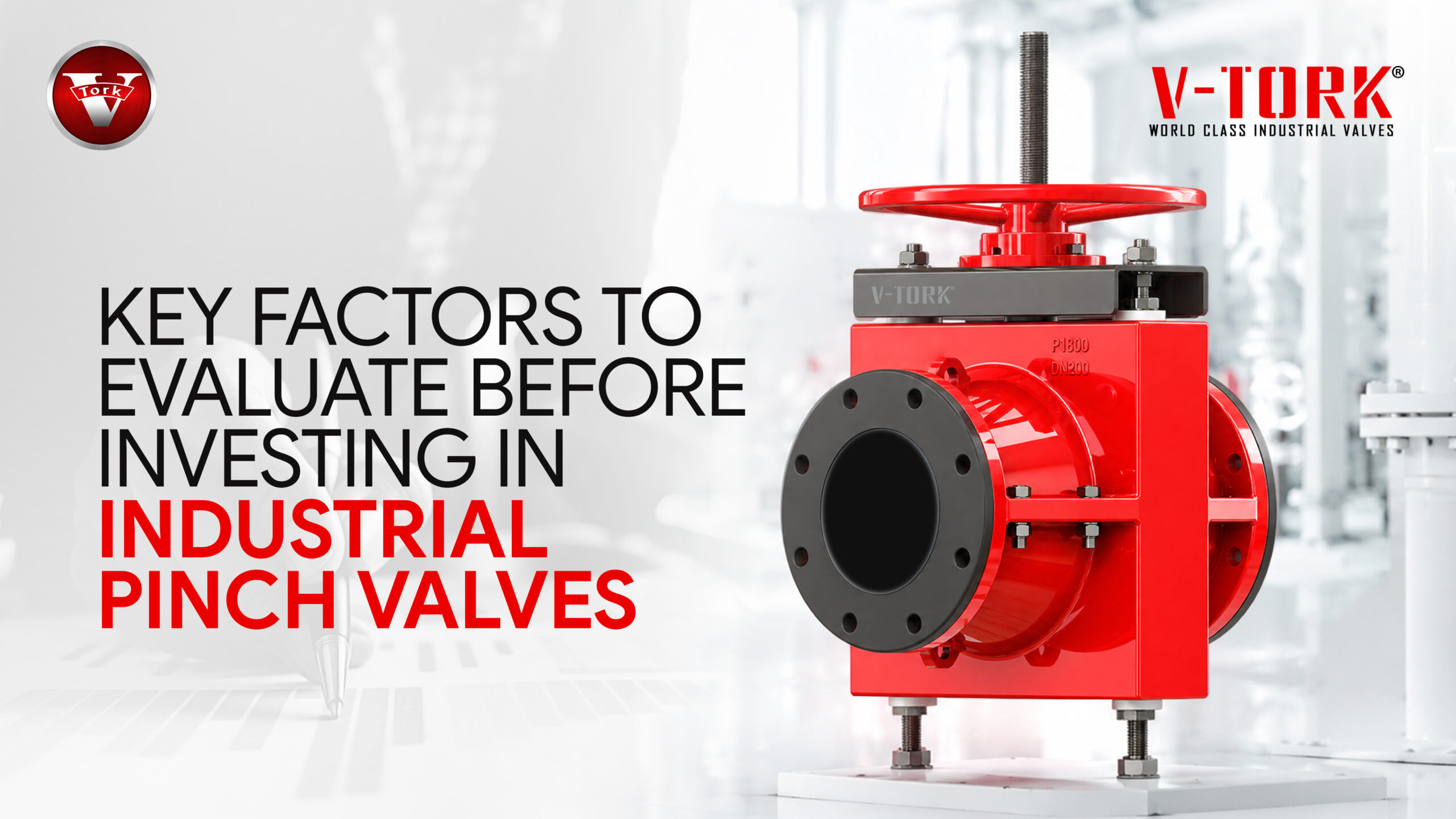
Key Factors to Evaluate Before Investing in Industrial Pinch Valves
- Pinch valves are well-suited for controlling abrasive and slurry media.
- Their flexible sleeve helps isolate the process media from internal valve components.
- Proper sleeve selection is critical for chemical compatibility and service life.
- Operating pressure, temperature, media characteristics, and cycle frequency should guide valve selection.
- Construction quality and long-term serviceability are essential when choosing pinch valves for industrial applications.
1. Sleeve Construction and Layer Integrity
The sleeve is the functional core of any pinch valve. We evaluate it as a three-layer system:
| Layer | Function |
| Inner Wear Tube | Resists abrasion and wear from solid particles and high-velocity slurry |
| Reinforcement Layer | High-grade fabric construction that provides structural integrity under operating pressure |
| Outer Protective Layer | Governs overall durability and extends the service life of the sleeve |
A sleeve that fails at any one of these layers compromises the entire valve performance, regardless of the body or actuator specification.
2. Sleeve Material Compatibility with Process Media
Different elastomers perform differently across the media types. Before ordering, we check the sleeve material’s chemical makeup, temperature, and particle distribution of the media being passed through.
- We use natural rubber sleeves in applications such as general slurry and mineral processing for their high resistance to abrasion.
- EPDM rubber sleeves are ideal for chemically reactive environments such as chemical plant operations and tailings treatment.
- Any kind of mismatch between sleeve material and process media results in sleeve failure before its expected time, resulting in an unscheduled production line shutdown.
3. Size Range and Pressure Rating Alignment
The following three points have to be checked before the spec sign-off:
- In general, industrial pinch valve manufacturers provide sizes from 2 to 24 inches that fulfill the majority of standardization requirements in the process line.
- The pressure rating is the one you must check against the actual pressure at which the valve is running. Please note, sometimes people use the system pressure at the design stage.
- If we install the Class 150 flanged valve, we risk deforming the sleeve under working pressure, which could compromise the sealing face.
4. Actuator Selection for Process Requirements
The actuator determines how the valve integrates into the broader control architecture. We select based on cycle frequency and system type:
| Actuator Type | Best Suited For |
| Manual Handwheel | Low-frequency operation and maintenance isolation |
| Gear Operated | Large bore valves requiring mechanical advantage |
| Pneumatic Actuated | High-cycle automated process control |
| Hydraulic Actuated | High-pressure, high-force applications |
| Electrical Actuated | Remote or programmable control integration |
Actuator misalignment against operational demand directly reduces valve service life.
5. Design Features That Support Maintainability
Plant downtime is by far the main factor that drives the cost of continuous process operations. Features we look out for:
- Sleeve changes done by field personnel through disassembly of the two-piece body. Thereby the valves can remain at the site during maintenance time.
- The process is supported with full-bore flow, and turbulence-free operation is ensured through the pipeline.
- Under harsh conditions, the dust-proof stem design will still deliver superior performance.
- One-sided retainer ring rubber sleeve with flange holes that lock the sleeve against the flange extends sleeve service life under cyclical loading.
6. Industry-Specific Application Fit
Pinch valves are best suited to processes where the seal is kept completely out of contact with the product to prevent contamination and blockage, which in turn maximizes production yields. We verify whether pinch valves are really capable of handling the processes or not by looking at these application areas:
| Application Area | Why Pinch Valves Are Preferred |
| Mineral Processing and Ore Beneficiation | Handles high-solids slurry without internal obstruction |
| Tailings Treatment | Abrasion-resistant sleeve manages corrosive and particulate-heavy discharge |
| Chemical Plants | Sleeve isolation prevents media contact with valve body |
| Steel, Mining, and Power Plants | Robust two-piece design supports continuous heavy-duty operation |
| Sludge Handling | Full-bore design prevents clogging and buildup |
Reputed valve suppliers have a proven track record in these fields, making them far better procurement partners than general-purpose suppliers.
ALSO CHECK – Top 7 Industries that Benefit from Pinch Valves
Final Thought
Capital expenditure for the pin valve investment includes the operating performance and financials beyond the initial purchase price. Factors that influence sleeve construction, material match, pressure limits, actuator coordination, and service features define the full-life cost across the complete lifecycle.
Having a solid track record in pinch valve applications across a wide range of industries – electric power generation, metals, mining, chemicals, and water treatment – V-Tork Controls develops pinch valves that are specifically designed to cope with these environments through a two-piece valve body structure and a field replacement sleeve feature, which is key to minimizing plant downtime.
Contact the V-Tork Controls team today to get a clear understanding of valve requirements that match your process specs and the related solutions.