
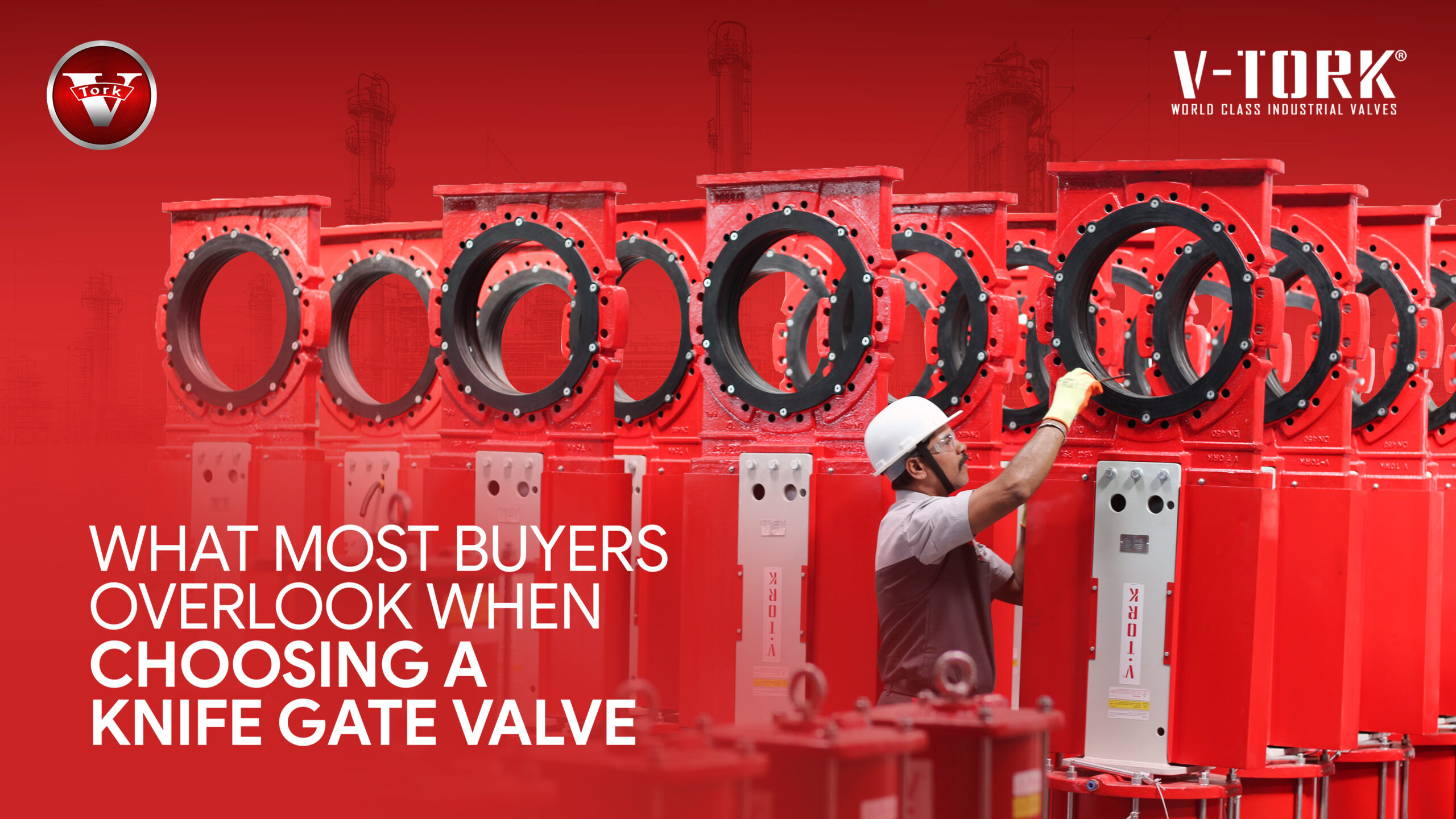
What Most Buyers Overlook When Choosing a Knife Gate Valve
When procurement teams evaluate knife gate valves, the checklist rarely goes beyond pressure rating, size, and material grade. Those parameters matter, but they account for only a fraction of what determines whether a valve performs reliably over its service life or becomes a recurring maintenance burden. Having worked extensively across power, mining, paper, chemical, cement, and water treatment sectors, we’ve seen the same overlooked factors create the same operational problems. This piece addresses what deserves more scrutiny before a purchase order is raised.
The Working Principle Determines the Application Fit
The working principle of a knife gate valve is simple: by dropping a sharpened gate through the passageway, the flowing media is cut off and isolated, leaving only the gate to seal it tightly. Whereas traditional gate valves have a function that is to modulate flow, knife gate valves only function as a means of full isolation between fluids. Valve users who try to use a knife gate valve for throttling or modulation usually find that the seating surface quickly becomes worn out and the sealing capability is reduced. This knife gate valve working principle is a great basis for understanding, and anything else, including materials, actuation, or bonnet types, is actually derived from it.
Unidirectional vs. Bidirectional: The Two Are Not Interchangeable
Many Knife gate valve types are available, and in the process of selecting one, buyers usually do not take notice of one of the most essential differences, that is, the unidirectional and bidirectional valve designs. The unidirectional valve is only effective when pressure is applied to one side of the valve; such valves are appropriate for systems that have no reversals of flow. Whereas a bidirectional valve is constructed to withstand pressure or flow from whichever side, a bidirectional configuration becomes a must in slurry lines where abrasiveness is so high that process-wise you can expect backpressure. Choosing a model that is not compatible with a process that is going to give some back pressure is the best way to ensure sealing failures and leakage; even if you keep a good maintenance schedule, it cannot be fully reversed.
In addition to that, the decision that one makes whether to get bonneted or bonnetless is equally important. The bonneted one has a valve housing that protects the gate from being spilled over with media or being corroded in the air. Bonnetless designs, on the other hand, have less bulk and better access for cleaning, which may be of great value to operations on paper and pulp. One is not better than the other; the environment where they will be used will decide which is the best one.
The Material Choice is Not Only the Case of the Valve Body
Buyers usually look at the type of valve material, such as cast iron, WCB, SS 304, or SS 316, and decide right then. But they do not think about the compatibility of the gate and the seal elastomer with the process media. A gate made of a relatively softer material is likely to wear faster in a high-abrasion slurry media, resulting in a compromise of the sealing surface. On the other hand, the use of elastomers that react to a given chemical in a corrosive manner will bring about rapid damage of the valve seat, regardless of the material of the valve body to which the medium will be applied. The knife gate valve manufacturers that specialize in valves for tough industrial applications design sub-components as meticulously as the valves themselves. A wise buyer should check specifications in a way that would indicate this rather than merely take it for granted.
Also, such a lined valve as a polyurethane-lined knife gate valve is produced specifically to deal with highly abrasive and corrosive materials. They are not just rare ones; you can find them almost technically correct when speaking about valve choice for a mining or mineral processing situation.
Slurry Density and Particle Size Matter More Than Many Buyers Realize
Slurry applications demand valve designs based on media density and particle size, not a one-size-fits-all approach. Fine slurries may suit elastomer-sleeved valves, while dense, coarse, and highly abrasive media often require U-seal seats, PU bore liners, or fully PU-lined knife gate valves. Ignoring these characteristics can accelerate gate and seat wear, reduce sealing performance, and shorten valve life.
Don’t Overlook the Flushing Requirement
For elastomer-sleeved slurry knife gate valves, flushing is essential to prevent slurry buildup inside the sleeve. Without it, accumulated material can harden, restrict gate movement, and eventually cause valve jamming. Where flushing is unavailable, self-flushing or alternative valve designs offer a more reliable solution.
Getting the Right Match: Actuation is a System-Level Decision
If the valve is not matched with its actuation system, the performance is unlikely to be at the required level. Different kinds of manual, pneumatic, electric, and hydraulic actuators have specific demands of the valve in terms of the torque that it requires and the manner in which it reacts. Quality valve manufacturers will select and prepare the actuator interfaces considering the valve’s working conditions, rather than as a side issue. Buyers who source valves and actuators separately often experience that their actuator cycle time or force output is mismatched with the requirements of their process.
Quality Assurance Standards Are Non-Negotiable
Every valve that enters a critical flow control application should carry documented inspection and testing records aligned with Indian or international standards. Hydrostatic body testing, seat leakage testing, and dimensional verification are baseline requirements, not optional supplements. Requesting these records before purchase is standard practice, not an unreasonable ask.
Final Thought
Most selection errors with knife gate valves are not caused by unfamiliarity with the product; they are caused by evaluating valves against incomplete criteria. Connecting the knife gate valve working principle to the actual process, understanding the relevant knife gate valve types and their respective design logic, and verifying sub-component specifications all sit within a buyer’s control before procurement. At V-Tork Controls, our range spans general, slurry, and AWWA knife gate valves, configured for industries where operational reliability is not optional. If your current specification leaves any of the above questions open, connect with our team at vtorkcontrols.com. We’re equipped to close those gaps before they reach the plant floor.