
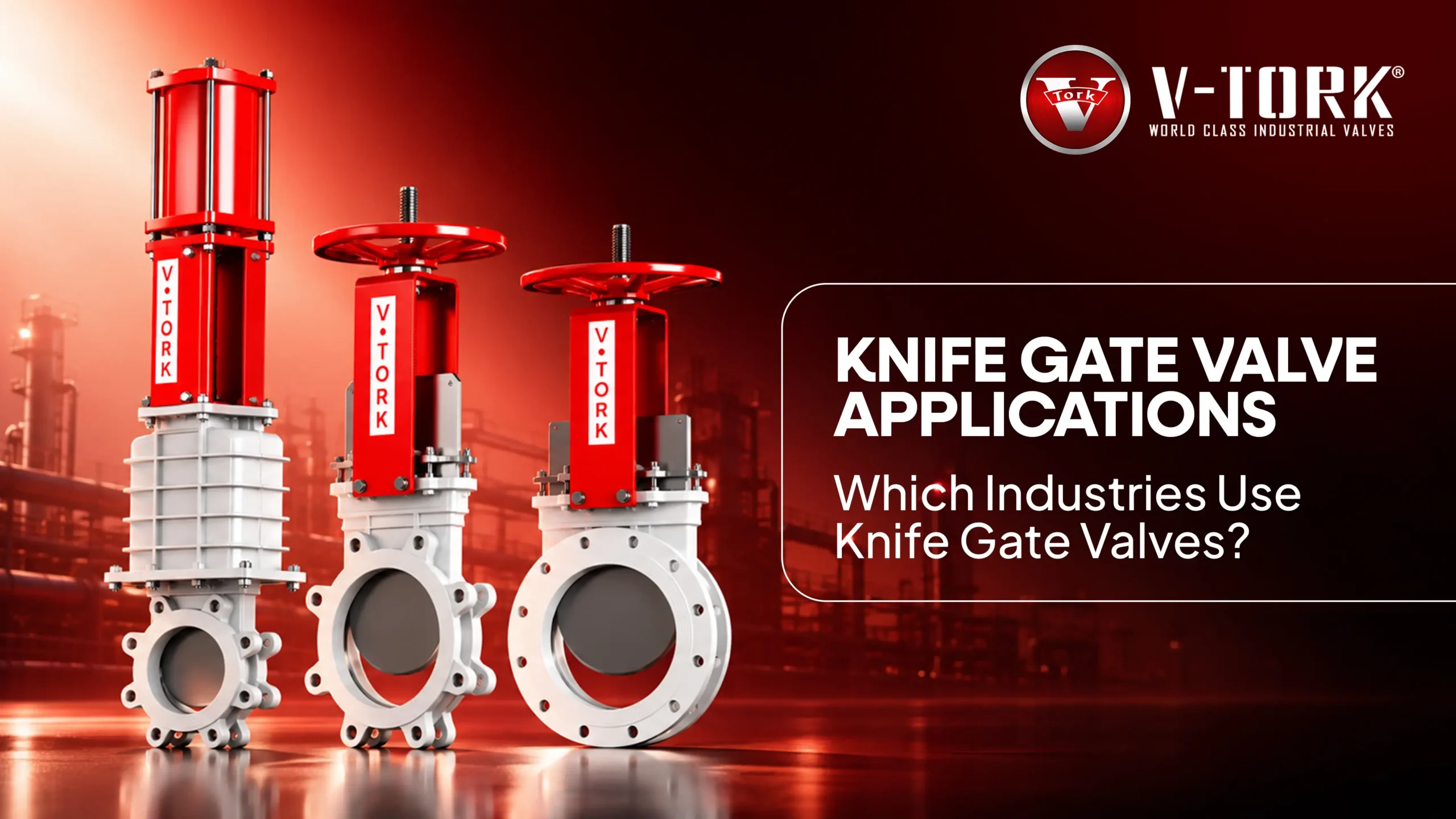
Knife Gate Valve Applications: Which Industries Use Knife Gate Valves?
- Knife gate valves are designed for thick, gritty lines that contain fibre.
- They are used daily at power, mining, paper, water treatment, cement, sugar, and chemical plants.
- Good knife gate valve manufacturers look at the media first and pick the valve second.
Every plant has a specific line to monitor, whether it’s the ash line, tailings line, or sludge line. Typically, a maintenance worker is always stationed next to it. Often, the valve on these lines was not designed for the intended purpose. Knife gate valves are specifically suited for these situations. This guide will cover where they are used, the challenges faced by various industries, and important considerations to keep in mind before making a purchase.
What Makes a Knife Gate Valve Different
A flat plate of steel with a sharp edge at the top is used as a gate. Sinks through the pipe and clears whatever is in the way, whether it is fibre, grit, or thick sludge, and seats. As the valve is opened, the blade moves fully away from the flow. The pressure drop remains low as there is nothing in the bore.
One thing to keep in mind is that the Knife Gate valve is an opening/closing (On-off) valve. If it has to be opened halfway to regulate flow, it results in rapid gate & seat wear.
Mining and Mineral Processing: Where a Slurry Knife Gate Valve Pays Off
Mining lines carry sand, quartz, lime, iron ore, coal, and tailings. All of it is hard, and all of it scrapes. A regular valve loses its seat fast and starts leaking.
Sleeved bi-directional designs hold up better. The replaceable rubber sleeves seal on both sides of the gate and keep the slurry off the metal parts. When a sleeve wears out, you can change it in the field itself easily. There’s also a purge port, so you can flush packed slurry out before it sets hard around the gate area.
A jammed valve on a tailings line is the kind of problem that gets your phone ringing at 2 a.m.
Power Plants: Ash, Gypsum, and Lime
A considerable amount of ash is transported in thermal plants. Fly ash, Bottom ash, Boiler bed ash, Mill rejects. Then the flue gas desulphurisation side throws on top of that the gypsum, the limestone, and the wet lime slurries.
The principle of Ash is that it’s essentially fine sandpaper moving along a pipe. The slurry knife gate valve applications is used in the gypsum and lime circuits to keep the media away from the metal and with a tight shutoff. This is more important than it sounds, as the valve becomes dusty if it leaks and you get stuck with a shutdown to clean it up.
Paper and Pulp
The enemy of a paper mill is fibre. It is present in pulp stock, lime mud, de-inking lines and liquor, and wraps around the valve internals until the valve no longer closes correctly. The blade cuts the fibre, and the entire port is open so that thick stock will not snag.
Liquor is corrosive; the material counts as much as the design. High-performance corrosion-resistant alloys, including super duplex stainless steels and nickel-based alloys, are commonly used for the body and gate.
Water and Wastewater Treatment
Raw sewage and waste activated sludge bring rags, grit, and chemicals, and these clog the seat on ordinary valves. AWWA/MSS SP standard knife gate valve applications have a full-throat opening, so maximum flow gets through. They come bonneted or bonnetless depending on how the valve is installed.
You’ll find them on lime addition, suction and sludge discharge, and diversion lines. For sludge, ask for a bi-directional pressure rating. If a line blocks, you can clear it from either side.
Knife Gate Valve Applications in Cement, Sugar, Chemical, and Everything Else
They are employed in cement plants on sand transfer lines, silica and pneumatic conveying, where abrasive powder can block a gravity-fed line.
The sticky problem for sugar mills. Everything is covered in juice, massecuite and molasses.
Slurries, powders and hopper discharge systems are the typical types of discharge systems found in chemical and fertilizer plants, typically using automated valves equipped with actuators, solenoids, and limit switches. They are used in the oil and gas industry for mud and sand transfer. The material of construction of body parts for food and pharma factories are stainless steel due to their ease of cleaning.
How to Choose the Right Valve
Start with the media. How abrasive is it, how many solids does it carry, what is the density, particle size and how corrosive is it? That decides whether you need metal seats, resilient seats, a sleeved valve or a special designed valve.
Next is flow direction. If pressure can reverse, go bi-directional. Match the body, gate, and seat materials to the chemistry, and check pressure and temperature against what the line actually sees, not the nominal figure.
Decide on actuation early. Adding an actuator later costs more than specifying it up front. Sizing is its own topic, and we’ve covered it in our knife gate valve sizing guide.
What to Ask Knife Gate Valve Suppliers Before You Order
A catalogue gives you specifications. A conversation tells you whether the supplier has handled your kind of media before.
Ask what testing each valve goes through before dispatch. Hydrostatic shell and seat leakage tests are the baseline. Ask how they handle material traceability. And ask how fast spare sleeves, seats, and gates can reach your site. People skip that last question until a shutdown has already started, and by then the answer is expensive.
Final Thought
The industries are different, but the job is the same: isolate something heavy and do it without fuss. Choose the design, materials, and actuation around the media from the start, and you save a lot of maintenance later.
At V-Tork Controls, we work with power, mining, paper, water treatment, cement, sugar, and chemical plants all the time. As knife gate valve manufacturers and knife gate valve suppliers based in Coimbatore, we’re happy to look at your application and suggest the right configuration. For product inquiries and specific requirements, please contact our team, to explore our product range and learn more about our solutions, visit vtorkcontrols.com.