
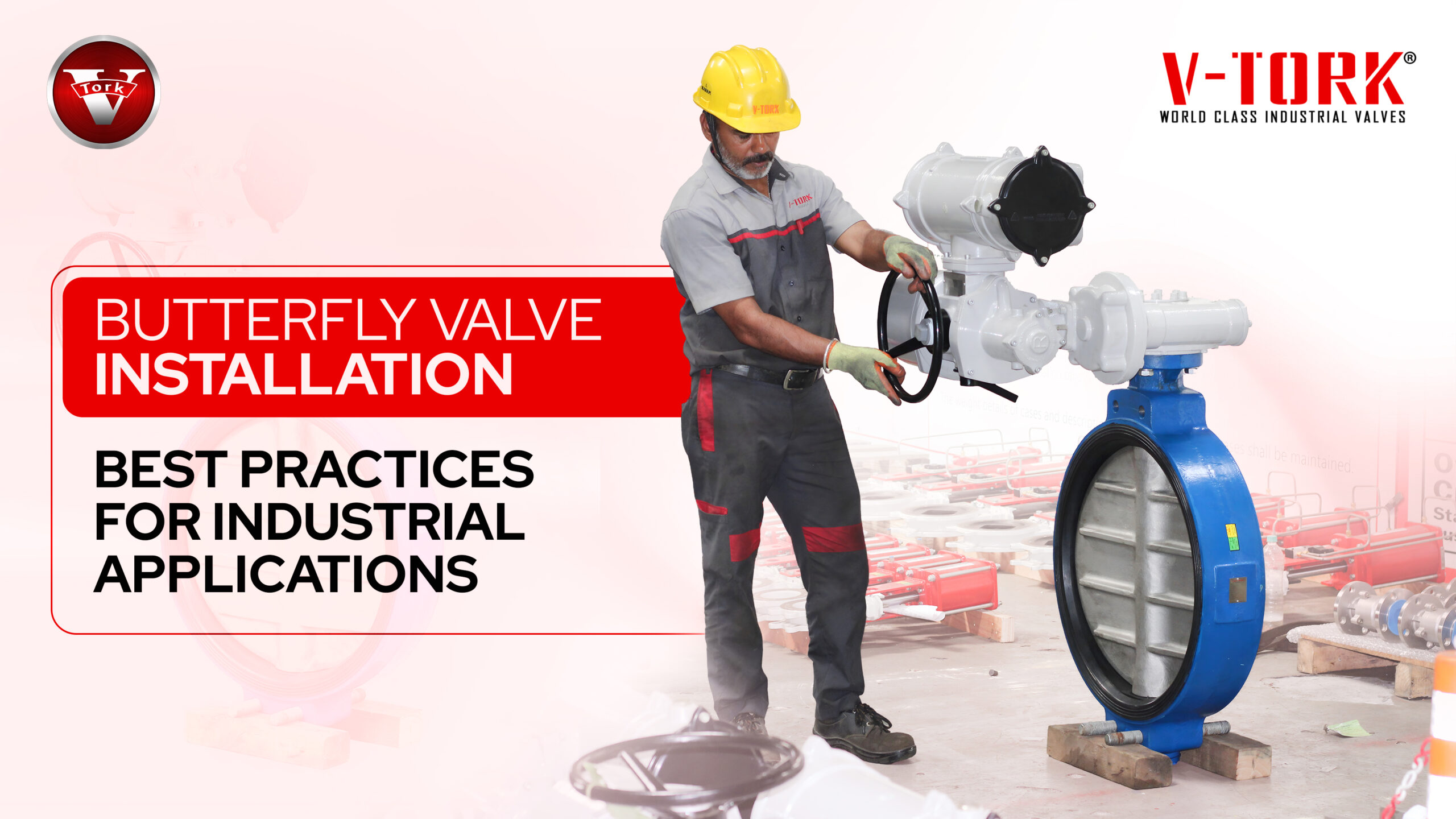
Butterfly Valve Installation Best Practices for Industrial Applications
Industrial process systems are based on accurate installations of valves to achieve reliable flow operation, safety and operational efficiency. The butterfly valve is a highly utilized product in industries because of its compact design, quarter-turn design and the capacity of undertaking large volumes of flow with minimal space demands. The success of the valve, however, is not limited to design but also to proper installation practices.
In professional installations, we focus on structured preparation, correct mechanical alignment and operational validation to ensure that the valve performs consistently throughout its lifecycle.
1. Pre-Installation System Assessment
Understanding System Requirements
We evaluate the operating conditions when we operate a butterfly valve, including such factors as the pressure type, temperature range and the kind of working fluid. This detailed evaluation ensures the choice of the appropriate valve design and actual working conditions of the pipeline system.
Choosing the Right Valve Design
Different industries require different valve designs. For example, resilient seated types like double offset are very popular for water applications and utility services where the small size of the construction is important and the sealing is taken care of.
Compatibility with Pipeline Standards
Flange standards, actuator mounting compatibility and the dimensions of the pipes are the ones we examine before the installation. This helps reduce the risk of delays in installation and avoid mechanical incompatibility during assembly.
2. Positioning and Alignment of the Valve
Cleaning and Debris Removal
Valve placement should be preceded by proper pipeline preparation. We verify that the pipe is clean, without welding residue, metal powder or any other unfamiliar object that may affect the sealing surface or the movement of the disc.
Flange Alignment and Spacing
Proper flange alignment is important when the butterfly valve is being installed. If the flanges are not properly aligned, this can lead to uneven stresses in the valve body, which can in turn affect the sealing performance and even the actuator functionality.
Controlled Bolt Tightening
We follow a bolt tightening process that involves a methodical tightening to achieve a uniform compression across the faces of the flange. The method is aimed at maintaining the structural integrity of the valve bodies and preventing the sealing elements from becoming distorted.
3. Valve Positioning and Orientation
Disc Clearance during Installation
We make sure that the valve disc is free to rotate and that it is not touching the interior of the pipeline before final screwing of the flange bolts. Proper clearance will ensure a smooth running of the valve and will prevent mechanical interference.
Shaft Orientation for Balanced Operation
Long-term valve performance is greatly enhanced by the right shaft position. In fact, keeping the shaft horizontal for most of the industrial processes can be beneficial in reducing uneven load distributions and providing stable sealing performance.
Consideration for High-Performance Designs
Triple offset and double offset valves are the settings that are more advanced and require alignment. The offset feature is designed to reduce the friction between the disc and the seat and thereby improve both the durability and the functionality of the system.
4. Actuator Integration and Control Compatibility
Actuator Selection and Torque Verification
Automated actuation is nowadays the most common accompaniment of a valve installation. During installation, we check whether the actuator output torque meets the valve operating requirements.
Mounting and Alignment
Proper actuator mounting is not only necessary for avoiding inconsistent loads on the valve stem but also ensures that the working of the valves is smooth and the internal parts are not subjected to premature wear.
Control System Integration
Automation systems cannot operate precisely without getting the right feedback. We double-check during installation that the position indicators, limit switches and control interfaces are properly connected to the plant control system.
5. Post-Installation Inspection and Operational Testing
Functional Movement Verification
Once the valve is installed, we spin the valve a few times to ensure that the disc movement is free and unhindered. This test can be used to detect all alignment problems prior to the full functionality of the system.
Pressure and Sealing Checks
The operational testing involves testing the performance of the sealing under system pressure conditions. Sealing anomalies are identified early to avoid disruption of operations and maintenance problems.
Quality Assurance from Reliable Manufacturers
The collaboration with qualified butterfly valve manufacturers like V-Tork Controls allows delivering stable performance since the production accuracy, choice of materials and engineering criteria have a direct impact on the success of the installation.
Final Thought
To attain reliable performance of the valves in industrial flow systems, proper installation practice is necessary. Proper pipeline design, orientation, alignment and post-installation testing will ensure that every butterfly valve works as per its design and also that control processes remain stable.
At V-Tork Controls, we focus on delivering engineered valve solutions that support efficient industrial operations. With a combination of properly designed valve technologies and disciplined installation practice, industries will be able to create flow control systems that are reliable, safe and have a high long-term operational performance.